

Having Trouble With Your Surface Cleaner? Here Are the Signs and How to Fix It
- Hydro-Quip

- Jul 23
- 4 min read
If you clean driveways, sidewalks, parking lots, warehouses, or other large concrete surfaces, your surface cleaner is one of the biggest productivity boosters in your equipment lineup. When it's working properly, it delivers faster, more consistent results than using a standard pressure washing wand. But when something goes wrong, you'll notice it almost immediately.
From unsightly striping to a cleaner that won't spin, surface cleaner problems can slow your jobs, frustrate customers, and put unnecessary strain on your pressure washer.
At Hydro-Quip, we service pressure washers and surface cleaners every day, and many of the issues we see have simple causes—if you know what to look for. Here are the five most common surface cleaner problems, what causes them, and when it's time to bring your equipment in for repair.
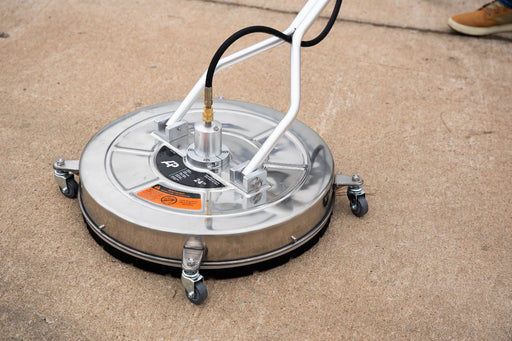
1. Your Surface Cleaner Is Leaving Stripes
One of the most common complaints we hear is, "My surface cleaner is leaving streaks everywhere."
Instead of producing an even, professional-looking finish, you'll see alternating clean and dirty lines across the concrete.
What causes striping?
Most of the time, the issue comes down to the spray tips.
The two most common causes are:
Clogged spray tips
Spray tips that aren't aligned correctly with the spray bar
Many operators don't realize that each spray tip has a small slot that must be properly aligned with the spray bar. If the tip is rotated incorrectly, the water fan pattern won't overlap correctly, leaving visible stripes behind.
How to fix it
Start by removing and cleaning each spray tip.
While reinstalling them, make sure the slots are properly aligned with the spray bar. This simple adjustment often restores the even cleaning pattern your surface cleaner was designed to produce.
If striping continues after cleaning and aligning the tips, it's worth having the unit inspected for additional wear.
2. Your Surface Cleaner Won't Spin Like It Used To
If your surface cleaner spins slowly—or doesn't spin at all—your productivity can drop dramatically.
A properly functioning spray bar should rotate smoothly and consistently during operation.
Common causes include:
Clogged spray tips
The first thing to inspect is the spray tips. Even partial blockages can reduce water flow enough to slow the rotating bar.
Bent spray bar
If the spray bar has struck curbs, parking stops, or other obstacles, it may become bent. Even slight bends can affect balance and prevent smooth rotation.
Worn spinner union
The spinner union is one of the most common wear items on a surface cleaner.
As it wears, the rotation becomes rough or may stop altogether.
In some cases, adding grease can temporarily extend its service life, but eventually the spinner union will need replacement.
3. Your Surface Cleaner Isn't Cleaning Like It Used To
Maybe it's still spinning—but your cleaning speed has dropped noticeably.
If you're making multiple passes over areas that used to clean in one pass, there's likely a problem somewhere in your system.
Possible causes include:
Worn spray tips
Incorrect nozzle sizing
Insufficient water flow from the pressure washer
Internal pressure washer pump issues
Damaged spinner components
Many contractors immediately assume the surface cleaner is the problem, but sometimes the issue actually starts with the pressure washer supplying it.
A professional inspection can quickly determine whether the problem is the cleaner itself or the pump powering it.
4. Your Pressure Washer Is Causing Surface Cleaner Problems
Your surface cleaner depends entirely on the pressure washer feeding it.
If the pressure washer isn't performing correctly, your surface cleaner won't either.
Here are a few pump issues that commonly affect surface cleaner performance.
Water leaking from the pump
Water leaking from the pump head often indicates worn water seals.
If left unrepaired, pressure output decreases and cleaning performance suffers.
Milky pump oil
Milky oil usually means water has entered the crankcase through failed oil seals.
Ignoring this can lead to severe internal pump damage.
Machine stalls when you release the trigger
A pressure washer that dies after releasing the trigger often has a failing unloader valve.
Without a properly functioning unloader, your surface cleaner won't operate consistently.
Low pressure or bogging engine
Stuck or broken check valves, worn seals, or unloader issues can all reduce water pressure and flow, making your surface cleaner perform poorly.
If you've already checked your spray tips and spinner assembly, it may be time to have the pressure washer inspected.
5. Your Equipment Is Overheating
One of the most expensive failures we see starts with excessive heat.
If your pressure washer pump becomes extremely hot—or you've noticed a melted oil cap—stop using the machine immediately.
This usually indicates catastrophic pump damage, often caused by operating without an adequate water supply or allowing the pump to run dry.
Unfortunately, once the pump reaches this stage, replacement is usually the only practical solution.
Fortunately, catching smaller issues early can often prevent this type of failure altogether.
Prevent Surface Cleaner Problems Before They Start
Routine maintenance goes a long way toward extending the life of both your surface cleaner and your pressure washer.
Some simple habits include:
Clean spray tips regularly.
Inspect spray tips for wear and proper alignment.
Check the spray bar for bends or damage.
Grease the spinner union when recommended by the manufacturer.
Verify your pressure washer is delivering the correct pressure and flow.
Inspect pump oil for contamination.
Never allow your pump to run without water.
A few minutes of maintenance can save hours of downtime during your busiest season.
Trust Hydro-Quip for Surface Cleaner & Pressure Washer Repairs
Whether you're cleaning residential driveways, commercial parking lots, warehouses, schools, or industrial facilities, reliable equipment keeps your business moving.
At Hydro-Quip, our technicians repair and service pressure washers, pumps, surface cleaners, spinner unions, unloaders, seals, check valves, and more. We can quickly diagnose the issue, recommend the right repair, and help get you back to work with minimal downtime.
If your surface cleaner isn't performing like it should—or your pressure washer is showing signs of trouble—our experienced team is here to help.
Contact Hydro-Quip today to schedule a repair or preventive maintenance service and keep your equipment cleaning at peak performance.


Comments